
This is what you came for.
Chimpanzee trekking in Kalinzu Forest Reserve is one of Uganda’s most rewarding wildlife experiences and one of its best-kept secrets. Here is everything you need to know before you go.
Where Is Kalinzu Forest?
Kalinzu Forest Reserve sits in Bushenyi District in southwestern Uganda, on the eastern escarpment of the Great Rift Valley, directly adjacent to Queen Elizabeth National Park. It covers approximately 147 square kilometres of mid-altitude tropical rainforest at around 1,400 metres above sea level; dense, layered and spectacularly alive.
Most travellers reach
Kalinzu as part of a western Uganda circuit, roughly five hours by road from Kampala. It also sits less than an hour’s drive from the Mweya Peninsula in Queen Elizabeth National Park, making it a natural addition to any safari through the region.
Why Kalinzu Rather Than Kibale?
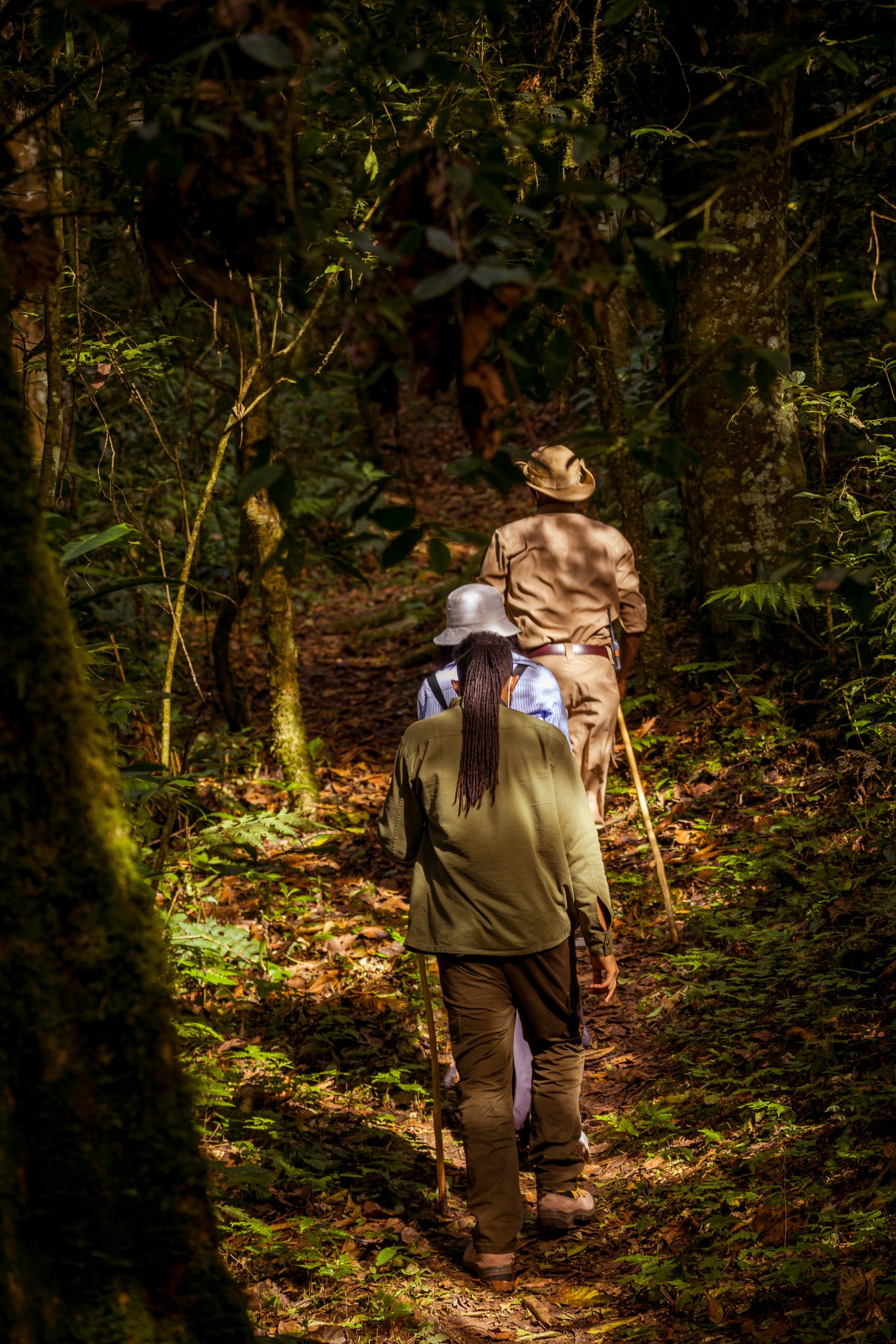
Kibale Forest is Uganda’s most famous chimpanzee destination, and rightly so. But Kalinzu offers something Kibale cannot: a quieter, less-visited experience in a forest that feels genuinely wild.
Group sizes are smaller. The trails are less trafficked. And permit costs are significantly lower for East African citizens and foreign residents compared to Kibale. For many travellers, this difference makes a second or even third trek possible.
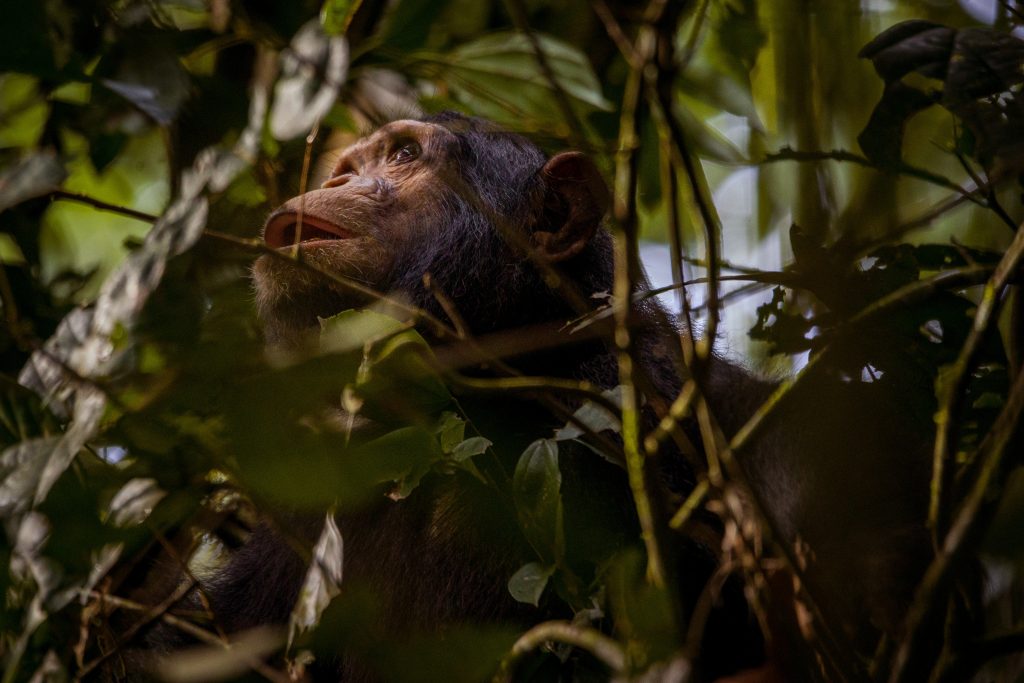
Thanks to ongoing ranger monitoring, sightings are highly likely, with most visitors encountering chimpanzees during their trek. The forest is home to more than 300 chimpanzees, with two habituated communities: one open to tourism and one reserved for research. Around 70 individuals have been fully habituated, meaning they are accustomed to human presence and can be observed behaving naturally.
What Happens on the Trek?
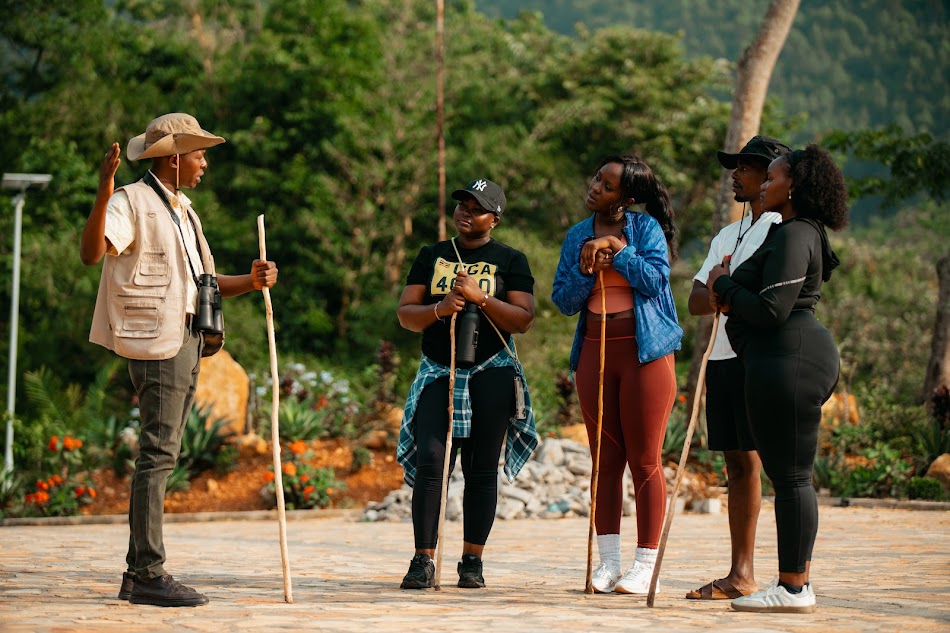
Trekking departs in two sessions, morning and afternoon, with most visitors choosing the morning. You arrive at the forest station, receive a briefing from your ranger guide, and are divided into small groups based on fitness and pace. Then you head into the forest.
The trek itself typically takes between two and four hours, depending on where the chimpanzees have moved overnight. When you find them, and you almost certainly will, you are permitted to spend one hour in their presence. No more. That limit exists to protect the chimpanzees from stress and disease, and it is observed strictly.
What you witness in that hour is difficult to put into words. Watching them groom each other, call across the canopy, chase through the undergrowth or simply sit and observe you back, it becomes impossible not to notice the similarities. There is an intelligence and familiarity to their behaviour that stays with you long after you leave the forest.
What Else Lives in the Forest?
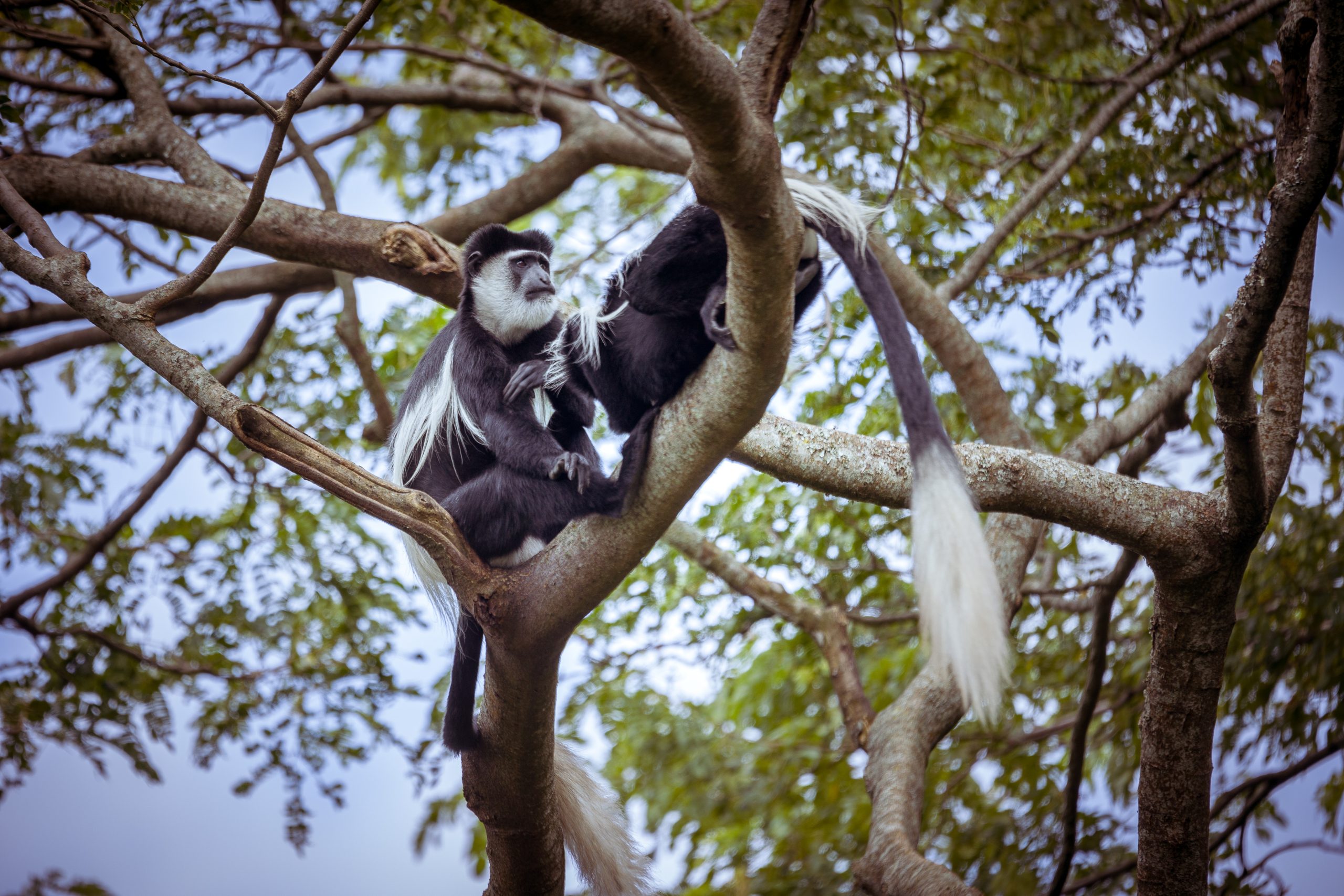
Chimpanzees are the headline act, but Kalinzu’s biodiversity deserves equal attention. The forest is home to six primate species in total, including black-and-white colobus monkeys, red-tailed monkeys, blue monkeys, L’Hoest’s monkeys and olive baboons.
The forest also supports larger mammals including leopards, forest elephants, giant forest hogs and buffaloes, although sightings are far less common than the primates and birdlife for which Kalinzu is best known.
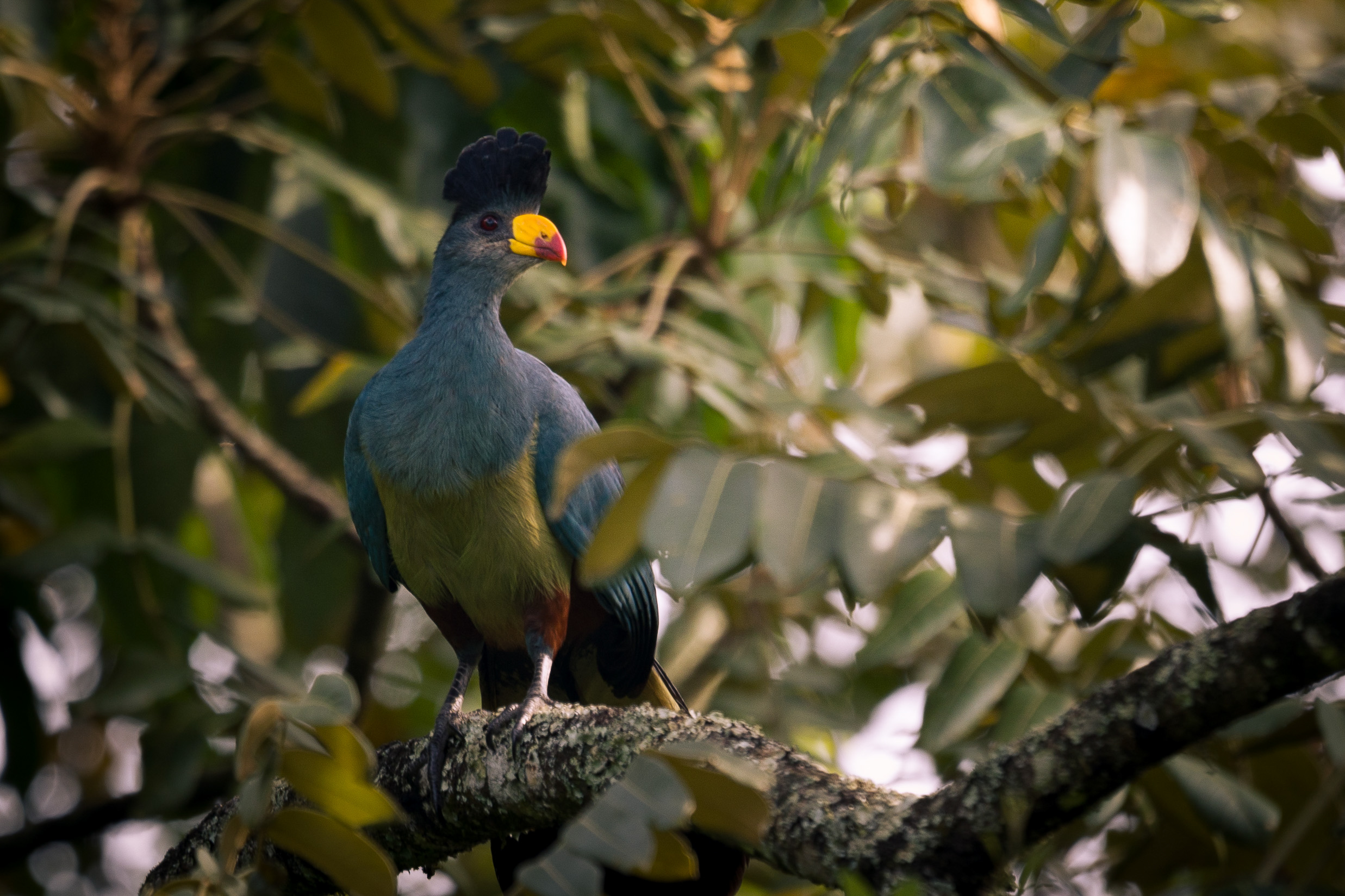
For birdwatchers, Kalinzu is exceptional. More than 378 species have been recorded here, including the Great Blue Turaco, African fish eagle, black-and-white casqued hornbill and a number of Albertine Rift endemics found nowhere else on earth.
Guided nature walks along the Valley, River, Palm and Waterfall trails open the forest up further; to its trees (more than 400 species), its butterflies, its medicinal plants and its nocturnal wildlife. Night walks can be arranged on request, offering the chance to encounter pottos, galagos and bush babies under torchlight.
What to Wear and Bring
Dress practically. Long-sleeved shirts and trousers in neutral earth tones such as khaki, brown and grey will help protect against scratches and insects while minimising disturbance to wildlife. Sturdy, waterproof hiking boots are essential, as the forest floor can be muddy and uneven in any season.
Bring insect repellent, a rain jacket, at least one litre of water, a snack and your camera. Walking sticks are available at the trailhead if needed.
Leave bright colours, strong perfumes and anything with a heavy scent behind.
The forest asks you to arrive quietly and leave no trace.
Staying at Kalinzu Ecolodge
Kalinzu Ecolodge sits at the edge of the forest, meaning the experience begins long before the trek itself. Wake to birdsong, enjoy breakfast overlooking the trees, and step directly into one of Uganda’s most remarkable wildlife encounters.
Our team can arrange permits, guides and transport, making it easy to explore Kalinzu Forest at your own pace.[SS3]